Fast fashion's obituary has been written so many times it has become its own genre. What's more interesting is what's replacing it — not a return to anything, exactly, but a refinement. A recalibration. Garments that merge the hand-stitched precision of bespoke with the lived-in eloquence of eras gone by. The new narrative for the well-dressed man doesn't rely on logo-flash or seasonal hype. It breathes in craft, invests in longevity, and makes a quiet but unmistakable statement of individuality.
Two houses, distinct in origin but united in ambition, are doing this with particular conviction.
Polo Ralph Lauren: the archive as raw material
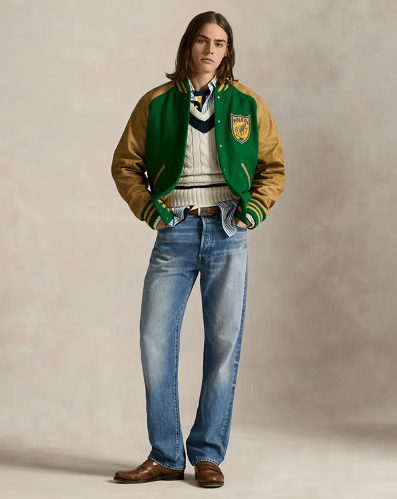
From the archives of Polo Ralph Lauren comes the Heritage Icons line, drawing directly on 1960s and '70s silhouettes — wool twill ranch jackets, corduroy blazers with brass-tone hardware, letterman-style pieces executed in tweed. The partnership with top mills in England and Italy produces what Lauren calls "re-woven" worsteds: reclaimed fibres spun into cloth that looks vintage and performs to modern standards.
This is Ralph Lauren in his most natural register. Not trend-chasing — the man has never been less interested in a trend — but mythologising. Taking the archive and making it available again, on terms the archive would have recognised.
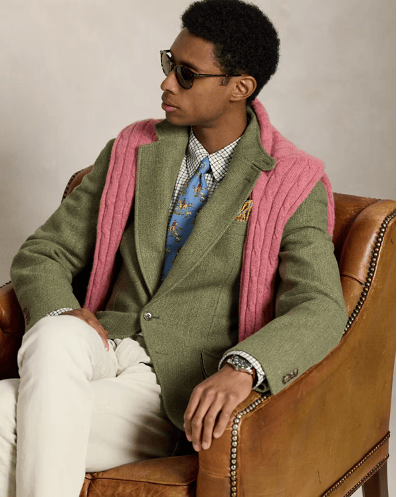
What's striking is who's buying it. The second-hand platform generation — the same cohort that drove vintage Levi's to absurd valuations and rediscovered the rep stripe tie as if discovering fire — has found Ralph Lauren with the enthusiasm of people who believe they've unearthed something their parents inexplicably abandoned. In a sense, they have. The Heritage Icons line works on a twenty-two year old in 2025 for precisely the same reason it worked on their grandfather: it looks like it has always existed, which is the highest compliment available to a garment. Lauren didn't invent this quality. He has simply never stopped making it available.
Thomas Farthing: vintage as infrastructure
In the converted Victorian townhouse of Thomas Farthing in Marylebone, the approach is slightly different: vintage isn't a reference, it's the foundation. Each garment draws from archival photographs of the 1930s and '40s. Fabrics are commissioned in very limited runs — a 1920s-style herringbone in reclaimed cashmere, for instance — and the tailoring is crafted with sustainability and longevity as the governing principles rather than the marketing afterthought.
The process is worth understanding. Farthing's team works from primary sources — museum collections, private archives, the kind of photographs in which a man is clearly wearing something he has worn before and will wear again, without ceremony, because it fits and it's his. The silhouette is extracted, adjusted for the modern body, and reinterpreted in fabrics that carry their own provenance. A commission at Thomas Farthing is less a retail transaction than an act of collaboration between the wearer, the tailor, and a specific moment in the history of dress.
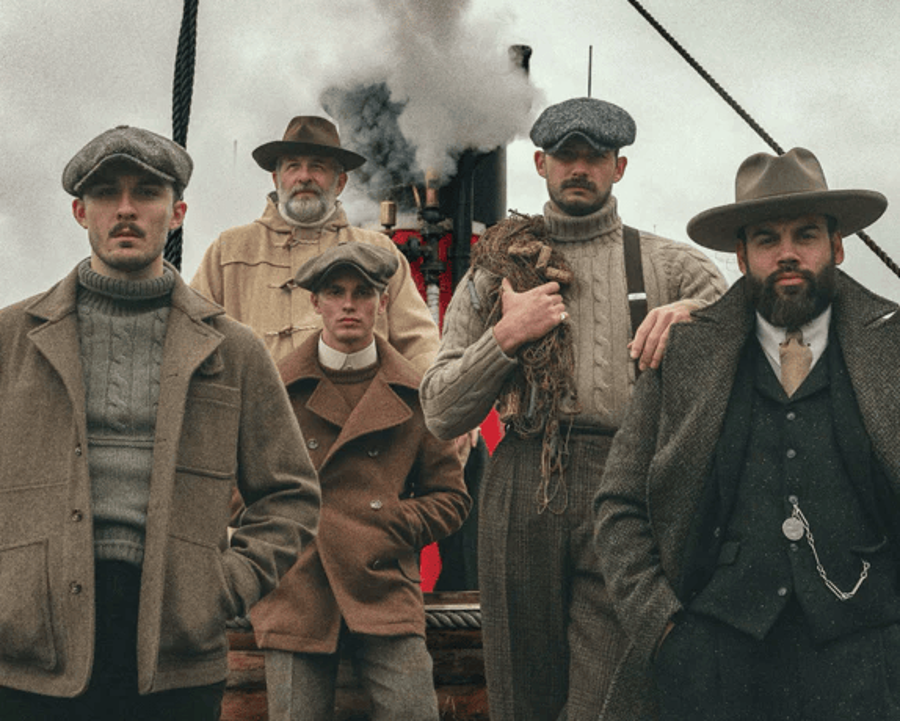
A coat based on a 1940s uniform cuts like a modern jacket but carries the emotional weight of something worn, something lived-in. Hand-selected fabric, bespoke construction, conscious sourcing: this is tailoring with integrity, and integrity, as it turns out, is rather good-looking.
The moment this is happening in
The vintage bespoke crossover is not emerging from nowhere. It is the logical response to a cultural exhaustion — the slow-building nausea that follows three decades of disposability. Fast fashion's authority has collapsed not because consumers have become more virtuous, though some have, but because the product no longer convinces. When everything is available instantly and cheaply, the things that are neither acquire a different gravity. Craft becomes a value rather than an affectation. Provenance becomes interesting. The question of where a garment comes from, how it was made, and how long it will last reasserts itself as a reasonable thing to ask.
Into this space, the vintage bespoke crossover moves with quiet confidence. It offers something the algorithm cannot: a garment with a history before you owned it and a future beyond the season.
What unites them
Less aesthetics than attitude. For the discerning client, there is a process worth engaging with properly. Start with the archives. Find a silhouette that resonates not as costume but as expression. Then insist on fabric provenance: most serious mills now publish data on sourcing and offer recycled or reclaimed yarns for clients who ask. Finally, embed narrative in the details. Discreet initials. Historical pocket linings. A tag referencing the original era, worn inside a garment built to outlast several of them.
The investment is higher upfront than a mass-market suit. The return is different too: fewer replacements, fewer regrets, a sharper personal signature. The garment becomes not just part of the wardrobe but part of the story.
In the hands of these tailors and brands, the past doesn't become museum display. It becomes material. The vintage bespoke crossover says that dressing well is not imitation but extension — you wear not just a suit, but a legacy.
And that, after all, is what makes great tailoring timeless.