The wax jacket has a foundational claim on the English imagination that no amount of technical outerwear has ever quite dislodged. Gore-Tex came and went. Softshell had its moment. The quilted jacket — that reliable index of the aspirational countryside — continues to rise and fall with the seasons. The Barbour simply endures, with the unruffled confidence of something that has never needed to justify itself.
This was originally a garment for people who worked outdoors. Fishermen, farmers, those who needed a coat that didn't flinch in a gale or a downpour. The waxed cotton kept out the rain. The corduroy collar kept out the cold. The cut accommodated layers — a cable-knit, a suit jacket, whatever the day required. Function first, in the manner of all genuinely durable things, with the appearance following without effort.
What happened subsequently is the Barbour's particular achievement: it moved from moor to Milan without losing its identity in either direction. You'll find it in country house boot rooms and on the backs of photographers at Paris fashion week. Art dealers in Florence. Farmers in Northumberland. Men who could wear anything and choose this — not because it signals anything in particular, but because it works, and they know it works, and they have long since stopped requiring their clothes to make arguments on their behalf.
That quality — the coat as settled fact rather than statement — is rarer than it sounds.
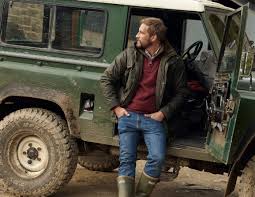
The case for buying used
A new Barbour is perfectly legitimate. Buy one and treat it accordingly: scrunch it, compress it, expose it to the actual weather it was built for. The break-in period is part of the contract. A pristine Barbour is merely a jacket; a used one is just starting to become something.
Better yet, buy second-hand. The secondary market in wax jackets is considerable and largely honest — these coats were built to survive decades of serious use, and a Barbour that looks battered usually has more miles left in it than most. The best ones carry visible history: a faded back panel, a replaced button, a seam that's been professionally re-stitched. These are not flaws. They are the record.
On care, repair, and Mallin & Son
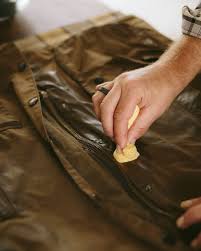
Barbour runs its own reproof and repair service out of the South Shields factory — a straightforward postal arrangement that will return most jackets to working condition. For those who prefer a specialist, Mallin & Son in Ossett, West Yorkshire, have become the authority on waxed jacket restoration. Founded in 2019 by Ryan Mallinson — whose family name runs back to the Yorkshire cloth dressers of the early 1900s — the business operates from Springfield Mill, re-waxing and repairing jackets from Barbour, Belstaff, Partridge and everything in between, for clients across the UK and well beyond. The wax comes from Halley Stevensons in Dundee. The seamstress has forty years of experience. The turnaround is seven to ten days, the flat rate £55, and the results are, by consistent account, remarkable.

Ryan Mallinson's view is that every re-wax adds a chapter — that the jacket's history accumulates in its texture and weight rather than being erased by it. It's a sound philosophy, and one the garment itself supports. A coat that improves through use and can be restored rather than replaced is as close to the opposite of fast fashion as clothing gets.
Which model?
The Bedale is the most versatile: short, with the characteristic split vent for riding, and a casual fit that moves between town and country without drawing attention to the transition. The Beaufort runs longer with the game pocket — more emphatically rural in register, more useful in sustained bad weather. The Ashby is the urban cut, slimmer and less assertive, the version that works best in cities and on public transport. The Border is the serious proposition: full length, maximum coverage, a coat that means it.
None of these is wrong. The choice depends less on preference than on an honest account of where you actually go and what you actually do when you get there.
Barbour jackets were sustainable before the word ever existed as a marketing category. Built to last, designed to be repaired, a garment which improves rather than degrades with use. In a market that has spent thirty years persuading people to buy more and keep less, a coat that rewards the opposite instinct is something close to a corrective.
You don't buy a Barbour. You start a relationship with one. The terms are straightforward: wear it properly, maintain it occasionally, and it will outlast almost everything else in your wardrobe.